Africa's Cocoa Market After the Price Crash: What $4,000/t Means for Cameroon, Ghana and Côte d'Ivoire
Cocoa futures have stabilized near $4,180 per tonne after a 64% drop from 2024 peaks. Here is how the slump impacts West African state budgets, farmers, and trade.
Cocoa Prices Crash to $4,180: What the Post-Peak Slump Means for West African Economies
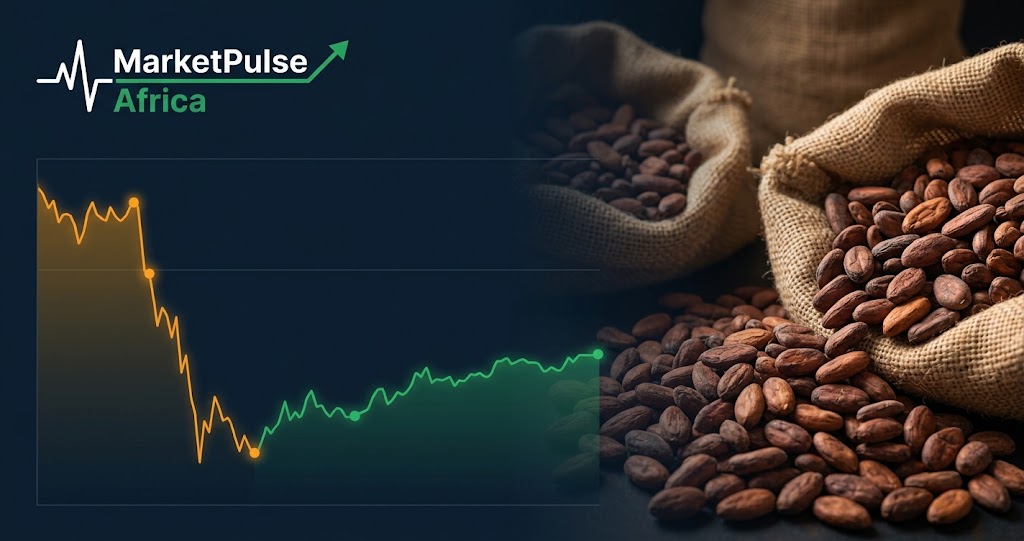
The historic cocoa bull run that captivated global commodity markets has ground to an abrupt halt. Cocoa futures trading on the Intercontinental Exchange (ICE) have dropped to approximately $4,180 per tonne, representing a modest decline of $120 over the week and a 2.79% fall across five trading sessions. While recent weekly price action has settled into a tight consolidation band between $4,100 and $4,340—suggesting the aggressive sell-off may finally be finding a temporary floor—the broader macro shift is staggering.
Today’s prices reflect a drastic 64% collapse from the record peak of $11,530 per tonne established in June 2024, which marked the highest nominal price the contract had reached in 46 years.
For commodity traders, sovereign debt analysts, and agricultural policymakers across West Africa, the rapid unwinding of this historic rally presents an entirely new set of economic challenges. The meteoric surge above $11,000 per tonne was purely a supply shock, driven by severe structural deficits in West Africa. Now, as meteorological conditions stabilize and harvest projections normalize across Côte d'Ivoire, Ghana, and Cameroon, the unwinding of that rally is putting fiscal buffers, state marketing boards, and smallholder farmers to the test.
Unpacking the Crash: How Supply Dynamics Reversed
To understand why cocoa prices crashed by more than six thousand dollars per tonne in two seasons, one must look at the supply-side shock that created the initial spike.
West Africa is the undisputed heartland of global cocoa production, contributing more than 70% of the world’s annual bean supply. Between late 2023 and mid-2024, the region suffered an extraordinary convergence of adverse factors:
Severe Climate Disruptions: An unusually intense harmattan—the dry, dust-laden seasonal wind blowing from the Sahara—swept across West African farming belts, drying out cocoa pods and burning foliage.
Epidemic Crop Diseases: Extended periods of heavy off-season rains before the harmattan fueled widespread outbreaks of Black Pod disease and Cocoa Swollen Shoot Virus Disease (CSSVD), destroying tens of thousands of hectares of mature trees.
Structural Underinvestment: Decades of low farmgate returns had left smallholders unable to afford fertilizers, crop protection chemicals, or tree replacement, leaving plantations aged and vulnerable.
This combination drove global cocoa deficits to multi-decade highs, forcing global chocolate manufacturers to scramble for physical inventory and pushing ICE futures to $11,530/t.
The 2025–2026 Normalization
The correction down to $4,180/t is the exact same supply story running in reverse. Rainfall patterns across Côte d'Ivoire and Ghana improved substantially during the 2025–2026 main crop growing cycles. Better soil moisture, combined with emergency disease-mitigation programs instituted by regional agriculture ministries, fostered healthy flowering and pod setting.
As global trade houses recognized that the structural supply deficit was closing faster than anticipated, speculative capital exited long positions, pricing in the return of higher bean volumes arriving at West African ports.
Symmetrical Price Charts, Asymmetrical Sovereign Risks
While a financial price chart moves symmetrically up and down, the economic arithmetic on the ground in West Africa is far less balanced. The structural difference in how individual West African nations regulate their agricultural sectors has created vastly different risk profiles in the wake of the price crash.
       +--------------------------------------------------------+
       |             GLOBAL COCOA PRICE MOVEMENTS               |
       |  June 2024 Peak: $11,530/t  --->  Current: $4,180/t   |
       +--------------------------------------------------------+
                                   |
         +-------------------------+-------------------------+
         |                                                   |
         v                                                   v
+-------------------------------+   +----------------------------------+
| FIXED FARMGATE PRICE MODEL    |   | LIBERALIZED MARKET MODEL         |
| (Ghana & Côte d'Ivoire)       |   | (Cameroon)                       |
+-------------------------------+   +----------------------------------+
| • State sets seasonal price   |   | • Farmgate tracks ICE futures    |
| • Protects farm income        |   | • Farmers capture full upside    |
| • State absorbs spread loss   |   | • Direct exposure to downside    |
| • Strains sovereign borrowing |   | • No state budget absorption     |
+-------------------------------+   +----------------------------------+
The Fixed Price Mechanism: Ghana and Côte d'Ivoire
Ghana and Côte d'Ivoire operate centralized marketing boards—the Ghana Cocoa Board (COCOBOD) and the Conseil du Café-Cacao (CCC), respectively. These state regulators set a minimum fixed farmgate price prior to the launch of each main crop season.
This mechanism is designed to shield rural households from sudden mid-season price swings on international exchanges. When world prices are rising, state boards forward-sell crop tranches to lock in revenues. When global prices fall below promised farmgate levels, the state marketing board absorbs the spread, utilizing accumulated reserve buffers to pay farmers the guaranteed rate.
However, a price drop from $11,530 to $4,180 per tonne within two seasons severely strains those institutional buffers:
Negative Spreads: If the promised farmgate price plus handling, drying, and export logistics costs exceeds the prevailing spot market price on the ICE, the marketing board operates at an immediate loss per tonne exported.
Sovereign Debt Exposure: To honor payments to licensed buying companies (LBCs) and farmers, state entities like COCOBOD must turn to syndicate loans or sovereign liquidity backstops. Consequently, COCOBOD’s borrowing costs have escalated, turning an agricultural pricing problem directly into a sovereign fiscal challenge.
The Liberalized Model: Cameroon
In contrast, Cameroon operates a liberalized cocoa market where local farmgate prices track international market movements almost continuously.
Cameroon produces approximately 300,000 tonnes of cocoa annually—a smaller harvest compared to Côte d'Ivoire's ~2 million tonnes, but a critical driver of rural livelihoods across the South-West, Centre, and South regions.
Because Cameroon does not offer a fixed price floor, Cameroonian farmers captured substantially higher per-kilogram returns during the peak of the 2024 rally than their peers in Ghana or Côte d'Ivoire. Today, however, they are directly absorbing the full impact of the downside adjustment. Local buying centers in production hubs like Centre and South-West have marked down bean prices in direct alignment with global futures.
Macroeconomic Implications for West Africa
The drop in global cocoa prices ripples far beyond farmgate collection centers, impacting national accounts, foreign exchange reserves, and banking liquidity across the region.
1. Currency Pressure and Trade Balances
For major exporters, cocoa bean and semi-finished product exports (liquor, butter, powder) represent a major source of foreign exchange inflows. As export receipts shrink relative to import bills, national trade balances weaken, applying depreciation pressure on local currencies like the Ghanaian Cedi.
2. Fiscal Deficits and Debt Sustainability
When state-backed commodity boards incur operational losses due to negative price spreads, national treasuries are often forced to issue guarantees or provide direct fiscal transfers. In countries navigating fiscal consolidation programs under international lenders, additional agricultural debt burdens complicate broader economic recovery efforts.
3. Rural Purchasing Power and Inflation
In liberalized markets like Cameroon, the decline in farmgate revenues reduces household income across rural communities, dampening consumer demand for manufactured goods, agricultural inputs, and services. Conversely, fixed-price systems maintain short-term rural spending power, though often at the cost of broader macroeconomic stability.
Market Performance Summary
To contextualize the scale of this commodity movement, the key market metrics tracking the recent cocoa price trajectory are outlined below:
Metric | Level / Figure | Context / Notes |
Current ICE Cocoa Futures | $4,180 / tonne | Spot benchmark price |
Weekly Change | -$120 / tonne (-2.79%) | Five-session price adjustment |
Recent Weekly Trading Range | $4,100 - $4,340 / tonne | Indicates potential short-term price discovery floor |
June 2024 All-Time High | $11,530 / tonne | 46-year record high during peak West African supply deficit |
Peak-to-Current Decline | ~64% drop | Correction driven by normalizing 2025-2026 weather and crop recovery |
Cameroon Annual Production | ~300,000 tonnes | Liberalized market model; 2nd largest ag export after timber |
Côte d'Ivoire Annual Production | ~2,000,000 tonnes | Fixed farmgate price model; world's largest producer |
What Businesses and Investors Should Watch
As the cocoa market establishes a fresh balance following the historic 2024-2026 price cycle, commercial bank risk teams, commodity trading desks, and policy analysts should monitor several critical variables through the remainder of the year:
The Farmgate-to-Futures Spread: The primary metric to track is the differential between ICE front-month futures and the fixed farmgate rates committed by COCOBOD and the CCC for upcoming crop cycles. Negative spreads signal potential fiscal intervention requirements.
Sovereign Borrowing Costs: Track yields on sovereign debt and state agency syndicated loans (e.g., COCOBOD trade finance facilities) for signs of credit stress resulting from buffer depletion.
Mid-Crop Weather Patterns: Monitor precipitation levels, humidity, and temperature trends across key growing districts in West Africa to gauge whether production recovery trajectory remains intact.
Port Arrival Figures: Keep close watch on weekly bean delivery data at Abidjan, San Pédro, and Douala ports to confirm physical supply volumes against trade house forecasts.
Grinding Data: Track quarterly cocoa processing figures from the European Cocoa Association (ECA) and National Confectioners Association (NCA) to evaluate how industrial chocolate demand is responding to lower raw material costs.
Strategic Takeaways for Key Stakeholders
For Commodity Traders and Agribusinesses
Hedge Exposure Dynamic: Ensure risk management models account for policy adjustments by regional marketing boards, as sudden shifts in local farmgate prices can alter bean smuggling incentives across regional borders (e.g., between Ghana and Côte d'Ivoire or Cameroon and Nigeria).
Diversify Supply Sourcing: Evaluate origin differentials across alternative producers, including Latin American origins (Ecuador, Brazil) that expanded planting during the 2024 price spike.
For Sovereign Risk and Debt Analysts
Incorporate Board Liabilities: Factor state marketing board debt guarantees directly into broader sovereign fiscal models, particularly in fixed-price jurisdictions where price falls create contingent liabilities.
Monitor FX Reserves: Track central bank foreign exchange reserve levels during peak harvest export months to measure net export realization under lower world prices.
For Regional Policymakers
Strengthen Stabilization Funds: Rebuild reserve buffers during high-price periods to ensure marketing boards can absorb downside shocks without relying on emergency sovereign borrowing.
Invest in Yield Resilience: Prioritize long-term capital expenditure in irrigation, disease-resistant tree varieties, and soil rehabilitation to protect total production volumes regardless of weather volatility.
How MarketPulse Africa Helps
As agricultural commodity markets navigate dramatic structural realignments, staying ahead of price shifts, currency fluctuations, and regulatory changes is vital for commercial leaders and financial market participants across the continent.
MarketPulse Africa serves as a primary destination for real-time intelligence on African financial markets, regional stock exchanges, foreign exchange dynamics, and agricultural commodity benchmarks. Through in-depth market coverage and macroeconomic reporting, the platform delivers actionable insights on how global macroeconomic trends directly impact African economies.
To track ongoing developments across West African commodity sectors, visit the MarketPulse Africa Blog for continuous market coverage, central bank analysis, and trade intelligence.
Conclusion
The decline of cocoa futures from $11,530 to $4,180 per tonne marks the close of an extraordinary cycle in global soft commodities. While lower prices offer relief to global chocolate manufacturers and end-consumers, they reset the financial landscape for producing nations across West Africa.
Moving through the remainder of 2026, the essential narrative is shifting away from pure commodity price movements toward the balance sheets of national regulators and sovereign treasuries. Whether through the direct exposure experienced by Cameroonian smallholders or the mounting fiscal pressures facing state boards in Ghana and Côte d'Ivoire, the true impact of this price correction will be measured on national balance sheets across the region.
Stay informed on regional trade trends, commodity benchmarks, and African financial market intelligence by following MarketPulse Africa.