Uganda Shilling Hits Record Low Near Shs4,250/$ as Central Bank Returns to Dollar Sales
The Uganda shilling fell to a record low near Shs4,250 per dollar, wiping out the gains from a 225-point rate hike. Why it is sliding and what comes next.

The Uganda shilling has fallen to a record low against the US dollar, and the Bank of Uganda is back in the market selling dollars to slow it down. On 22 October dealers quoted the shilling at Shs4,250–4,260 per dollar, compared with Shs4,045–4,055 a week earlier, according to Business Tech Africa's daily market briefing. bne IntelliNews reported the same day that the central bank had notified commercial banks it was selling foreign currency.
That is a sharp reversal. A week earlier the bank raised its key rate by 225 basis points in an emergency meeting, and the shilling briefly rallied. The gains are now gone.
How the Uganda shilling got here
The slide picked up in early October. The Daily Monitor's Dorothy Nakaweesi reported on 16 October that the shilling had hit Shs4,143 per dollar, its weakest level since 1993, and that Bloomberg ranked it the worst performer of the 144 currencies it tracks this month.
The Bank of Uganda responded on three fronts:
- Rates: at a special Monetary Policy Committee meeting on 14 October, Governor Michael Atingi-Ego raised the Central Bank Rate from 9.75% to 12%. The Monitor says that was the largest increase since October 2011 and the highest level since December 2016.
- Reserves for banks: the cash reserve requirement for commercial banks rose from 11% to 13.5%.
- Dollar sales: dealers estimate the bank sold up to $30 million, its first direct intervention since June 2022. BusinessDay's Faith Omoboye notes the central bank has not officially confirmed the amount.
The combination worked for a few days. BusinessDay reports the shilling strengthened to about Shs3,951 per dollar, then weakened to Shs4,138 by 16 October and Shs4,191 by 21 October, already below its pre-intervention level. Bloomberg reported on 22 October that the currency had dropped 2.5% in a day, erasing the gains from the rate hike.
Why the shilling keeps falling
Foreign money leaving government bonds
The main pressure is portfolio outflows. Citigroup estimated that more than $200 million left Uganda's domestic market in two weeks as offshore investors sold local government bonds, according to the Monitor. Stephen Kaboyo, a partner at Alpha Capital, told the paper: "The shilling will continue facing persistent downward market forces that will keep it on the back foot."
A wider current account gap
The current account deficit widened by $1.4 billion to $4.6 billion, the Monitor reported. A wider gap means the country needs more foreign currency to pay for imports than it earns, which leaves the shilling exposed when foreign investors pull back.
Imported inflation
Headline inflation rose to 4.6% in September from 4.1% in August. A weaker shilling makes imported fuel and goods more expensive, which is why the central bank moved so hard on rates. Uthman Mayanja, country senior partner at PwC Uganda, told the Monitor: "The Bank is tightening money supply today to contain inflation risks from a weaker shilling."
Can the central bank hold the line?
Uganda has more firepower than it did in 2022. BusinessDay notes that foreign reserves rose from about $2.7 billion in the 2022/23 financial year to $6.7 billion. That gives the Bank of Uganda room to keep selling dollars if it chooses.
But dollar sales treat the symptom. As BusinessDay put it, selling dollars "can provide temporary relief without necessarily reversing the forces driving depreciation." If bond investors keep leaving, the bank faces a choice between spending reserves, raising rates again, or letting the shilling find a lower level.
Higher rates also carry a cost at home. Makerere University economist Fred Muhumuza told the Monitor that rate hikes do not fix external supply shocks such as imported fuel prices. Average lending rates were already 17.3% in July, and economist Susan Kavuma expects banks to pass the increase to borrowers quickly, which would slow private-sector credit.
Who feels it first
- Importers and fuel buyers: every dollar of imports now costs more shillings.
- Borrowers: loan rates are likely to rise after the 225-basis-point hike.
- Kenyan exporters: Uganda is a major market for Kenyan goods, and People Daily warned on 22 October that a weaker shilling raises risks for Kenyan firms selling there, since their products become more expensive for Ugandan buyers.
- Foreign bond holders: higher yields may eventually attract buyers back, but only once the currency looks stable.
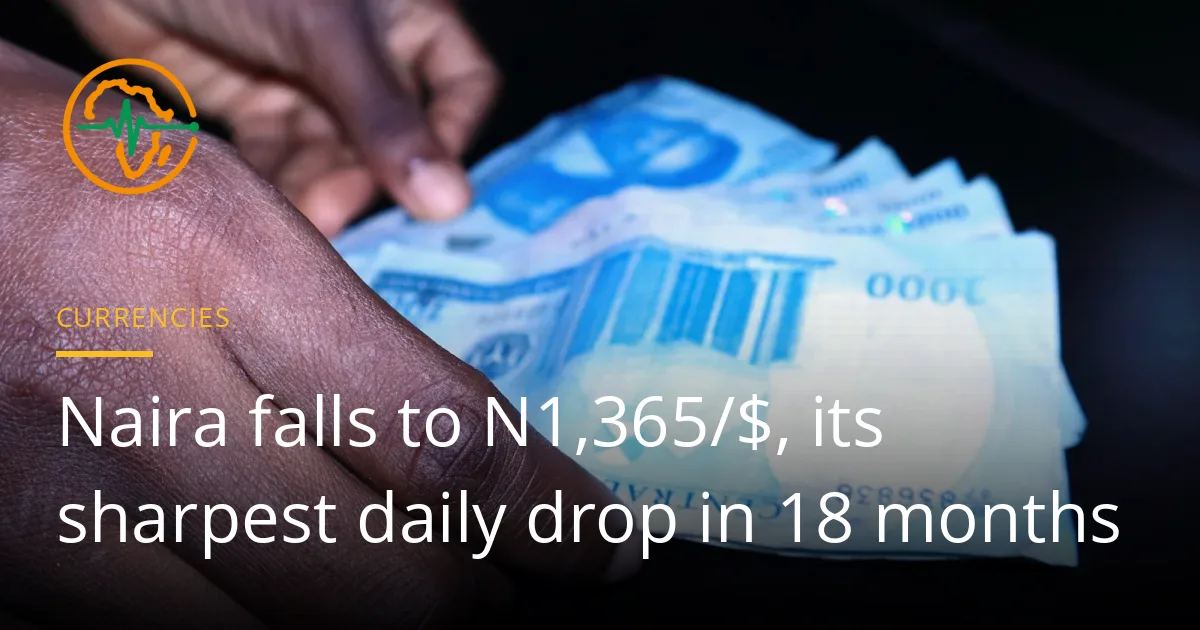
Uganda is not the only frontier currency under pressure this month. The naira posted its sharpest daily drop in 18 months on 23 October, as we reported in our naira exchange rate update.
What to watch
- Whether the Bank of Uganda confirms the size of its dollar sales.
- Results of the next government bond auctions, which will show whether higher yields bring foreign investors back.
- The next monthly inflation figures, for the first sign of pass-through from the weaker shilling.
Figures in this article are dealer quotes and estimates reported by the named outlets; official interbank rates may differ slightly. This is market reporting, not investment advice.