BREAKING: IMF raises Nigeria’s growth forecast to 4.2%, acknowledges Nigerians are suffering
The IMF has lifted Nigeria’s 2026 growth projection to 4.2% and left the 2027 forecast at 4.3%. The Fund cited improved stability but warned that higher food and energy prices are deepening poverty and hardship for households.
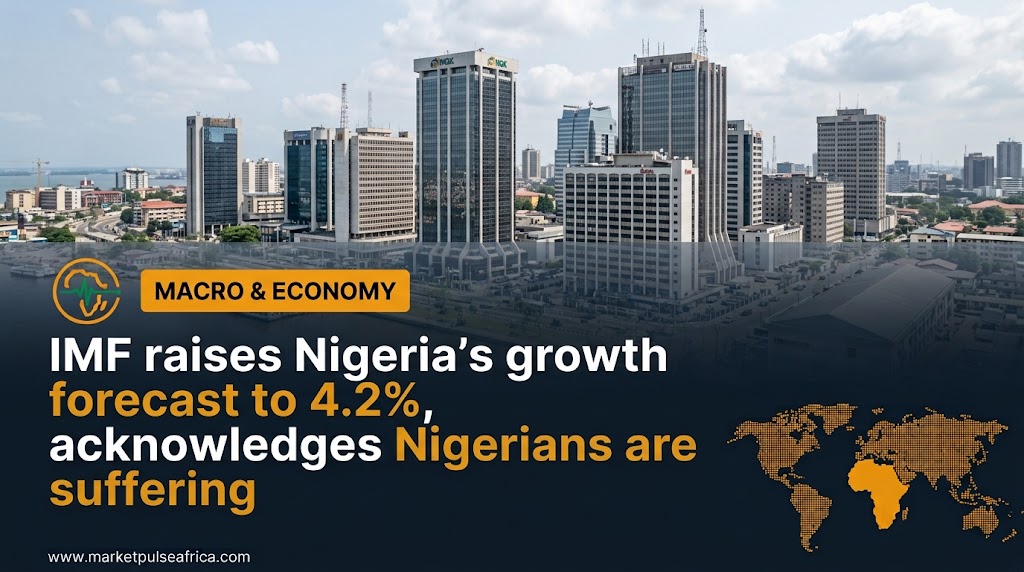
The International Monetary Fund has raised Nigeria’s economic growth forecast for 2026 to 4.2%. It projects growth of 4.3% in 2027.
The figures appear in the IMF’s October 2026 World Economic Outlook, titled “Resilience Under Strain, Urgent Choices.” The report was presented in Bangkok by IMF Director of Research Silvana Tenreyro. The 2026 forecast is 0.1 percentage point higher than the previous projection. The 2027 figure is unchanged.
Drivers of the Outlook
The IMF attributes the improved growth path to stronger macroeconomic stability and favourable terms of trade. These factors are expected to support activity even as external conditions remain challenging.
At the same time the Fund warned that higher prices for essential goods are likely to aggravate poverty and food insecurity. It called for immediate relief measures to ease the burden of rising food and energy costs, stating that it is mindful that Nigerians are suffering.
The Gap Between Growth and Living Standards
Headline growth of around 4% does not automatically translate into better living conditions for most households. When food and energy prices rise faster than incomes, poverty and food insecurity can worsen even as the overall economy expands. The IMF’s explicit acknowledgement of this pressure underlines the distinction between aggregate output and household welfare.
Nigeria has undertaken significant reforms in recent years, including adjustments to fuel subsidies and the foreign-exchange regime. Those measures have contributed to greater macroeconomic stability and improved terms of trade. The same reforms have also raised the cost of living for many citizens in the short term.
Policy Implications
The Fund’s message combines a modest upward revision to growth with a clear call for social relief. Sustaining the projected expansion will depend on continued policy consistency, while protecting vulnerable households will require targeted support that reaches intended beneficiaries.
Investors and policymakers will watch whether the growth path materialises and whether measures to cushion food and energy costs are effective. The 4.2% forecast for 2026 and 4.3% for 2027 provide a baseline against which actual outcomes can be judged.
The IMF’s latest assessment leaves Nigeria with a more constructive growth outlook than in some earlier projections, while refusing to ignore the hardship faced by households. Balancing the two remains the central policy challenge.