Dangote Refinery extends IPO as African investor demand surges
Dangote Refinery has extended its N2.15 trillion IPO to October 27. Here is what changed, what the offer looks like in numbers, and the risks to weigh before subscribing.
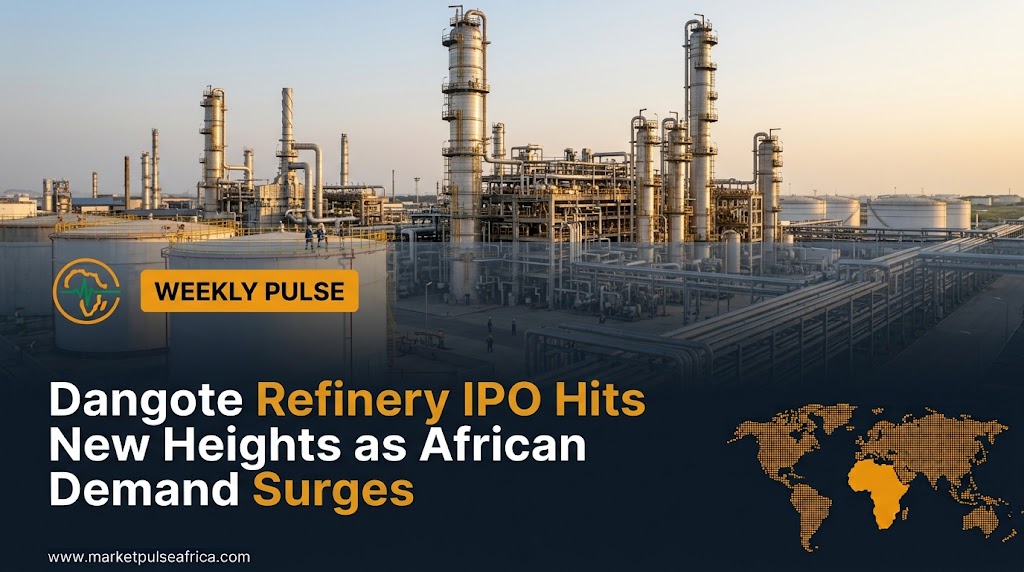
Dangote Petroleum Refinery and Petrochemicals has pushed the close of its N2.15 trillion (about $1.6 billion) initial public offering from October 13 to October 27, 2026. The company says the extension, approved by the Securities and Exchange Commission, is meant to give more African investors time to subscribe, not to raise more money. Aliko Dangote says subscriptions already exceed the original target by three to four times, though the company has not published independent subscription figures. The offer covers 4.1 billion ordinary shares at N525 each, and the proceeds will fund an expansion of the 700,000 barrel-per-day refinery near Lagos, which is expected to double its capacity by 2030. The offer is being marketed as a "People's IPO" with a minimum subscription of 10 shares. For Nigerian and African investors, this is a rare chance to buy into one of the continent's largest industrial assets, but the offer also raises questions about pricing, concentration and what happens after listing. This article explains what changed, what the numbers say, and what to weigh before subscribing.
Contents
- What changed and why the deadline moved
- The offer in numbers
- What the demand signals do and do not show
- Reaching retail investors across Africa
- Risks to weigh before you subscribe
- Related Reading
What changed and why the deadline moved
The public offer opened on September 14 and was due to close on October 13. Following SEC approval, the closing date now moves to October 27. In a statement, the company said, "The IPO is going very well. We will extend the closing date because we want more of our African brothers and sisters to participate." BusinessDay reported that management framed the extension as a way to broaden ownership of the refinery, not as a need for additional funds.
The company's stated reason is practical as well. Prospective investors need time to open accounts, complete identity verification and meet other regulatory preconditions before they can subscribe. Those steps can slow down a retail offer that is designed to reach a wide audience. The extension gives people who started the process late a fair chance to finish it.
The offer in numbers
The headline figures are worth stating plainly, because they are the basis for any investment decision:
- Size: 4.1 billion ordinary shares at N525 each, worth about N2.15 trillion or $1.6 billion if fully subscribed.
- Stake: Roughly 3.3 percent of the refinery's enlarged share capital, according to bne IntelliNews. Dangote and his affiliates already hold about 80.7 percent, and the state oil company NNPC Ltd holds a significant share.
- Entry point: A minimum subscription of 10 shares, which works out to about N5,250, or roughly $4 at the time of reporting.
- Greenshoe: The offer includes an option to sell an additional 30 percent of the shares if demand is strong enough.
- Use of proceeds: Expansion of the Lagos refinery, which is expected to double its crude capacity from 700,000 barrels per day by 2030.
The offer also has a pre-IPO history. A private placement in July was reported as 270 percent oversubscribed, even though the original plan was to raise $2.5 billion. A Lilium Capital Group subsidiary underwrote and funded $600 million of that placement. That context matters, because it tells you the institutional side of the deal has already been tested before retail investors were brought in.
What the demand signals do and do not show
The company says subscriptions have exceeded its original target by three to four times. That is a strong claim, and it is worth treating carefully. The company has not published subscription figures, and reporting from the first day suggested demand was intense. Several trading platforms, including Bamboo and Cowrywise, reported downtime as subscription traffic overwhelmed their systems. Commercial banks, brokerages and digital platforms also reported a late rush of activity as the original deadline approached.
Strong demand is a positive signal, but it is not the same as proof of value. Oversubscription in an IPO often reflects expectations of a share price pop on listing, not a verified view of the business. It also reflects how the offer was designed. A retail-focused IPO with a low minimum entry point will attract many small orders, and those orders can look impressive in total without telling you much about long-term holders. Investors should separate the excitement around the offer from the economics of the refinery.
The economics are real, though. The refinery is designed to meet a large share of domestic fuel demand and to reduce reliance on imported refined products. If the expansion to double capacity by 2030 is delivered on schedule, the company's revenue base and cash generation could change significantly. Whether the valuation at N525 per share reflects that future is the question each subscriber has to answer for themselves.
Reaching retail investors across Africa
The offer is designed to reach retail investors well beyond Nigeria. The company has set a target of 10 million retail investors in Nigeria and other African countries. A parallel depositary receipt programme is also part of the structure, priced in Kenyan shillings, with a minimum of 2,000 receipts. That is a meaningful step in building a cross-border retail base, and it reflects a model that Dangote has said he wants to replicate in other African capital markets.
The access model has its own practical considerations. Investors who use mobile apps or online brokers may face onboarding delays, and some have reported platform outages during peak periods. If you are planning to subscribe, complete your account verification early, confirm your broker's process for IPO applications, and keep records of your subscription confirmation. Do not wait until the final days of the window.
Risks to weigh before you subscribe
A few risks deserve attention before any money goes in.
Valuation risk. The IPO price is set by the company and its advisers. A high level of demand does not guarantee that the price is fair. Compare the offer price against the expected earnings of the refinery and the value of similar listed energy businesses before deciding how much to commit.
Concentration risk. Dangote and his affiliates already control about 80.7 percent of the company. A minority investor in the offer will have limited influence over strategy, dividends or future capital raising. That is normal for a controlled company, but it is worth understanding before you buy.
Commodity and margin risk. Refining margins depend on crude prices, product prices and the cost of imports. Oil markets can move quickly, and the company's profit will rise and fall with those conditions, not only with its own execution.
Liquidity after listing. Retail-heavy offers can see strong early trading and then thin volumes. Ask how the shares will trade after listing and how long a lock-up period, if any, will last. An investor who needs to exit may find the market is shallower than the excitement suggests.
Foreign investor flows. Reporting from Reuters, carried by bne IntelliNews, noted that foreign investors have been net sellers on the Nigerian market even as domestic demand for the IPO has been strong. Investors should watch whether that trend continues, because it affects how easily shares can be sold later.
Related Reading
For wider context on how capital is moving across African markets, read our full coverage of Côte d'Ivoire's foreign direct investment inflows in 2025, which shows how foreign capital is flowing into one of West Africa's fastest-growing economies. You can also read our full coverage of Egypt's fuel exports to see how energy trade is shaping external earnings across the continent.
Are you planning to subscribe, or are you waiting to see how the stock trades after listing? Share your view in the comments, and keep following MarketPulse Africa for the latest analysis on African markets and listings.