Nigeria-China Payments: CBN's Cardoso Takes Settlement Talks to Beijing
Nigeria-China payments are on the CBN's agenda as Governor Cardoso plans Beijing talks on settlement, fintech and trade finance with the People's Bank of China.
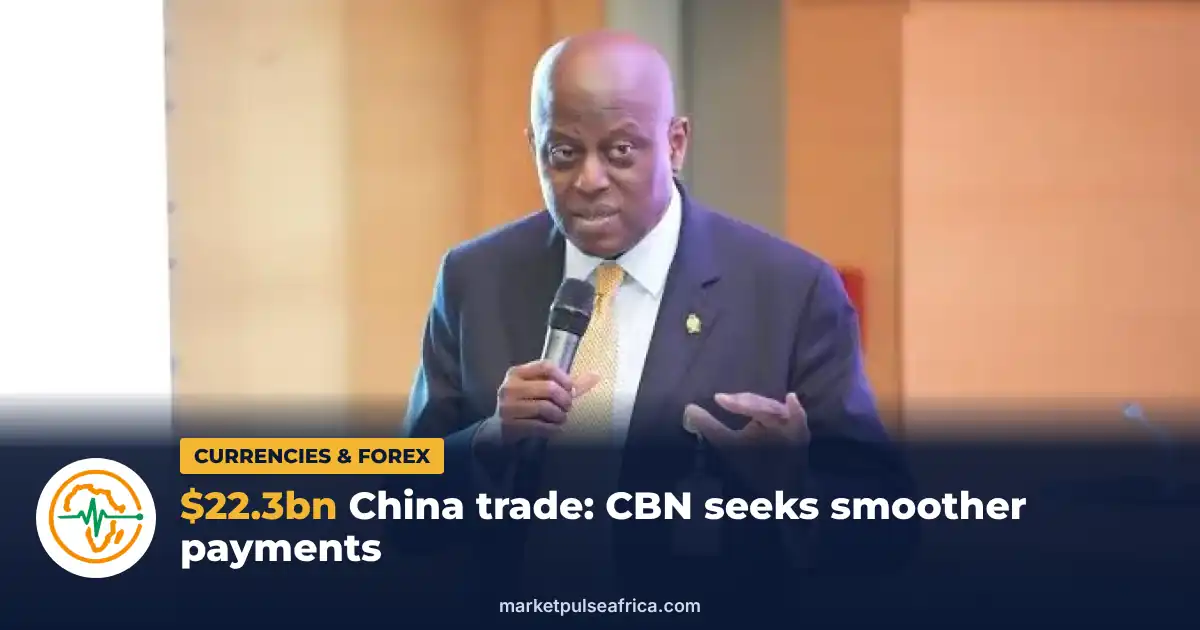
Nigeria-China payments are back on the Central Bank of Nigeria's agenda. CBN Governor Olayemi Cardoso said Nigeria will push for stronger cross-border payment arrangements with China during an upcoming visit to Beijing, after he discussed the subject with People's Bank of China (PBoC) Governor Pan Gongsheng on the sidelines of the IMF and World Bank Annual Meetings in Bangkok.
Cardoso made the remarks at a news briefing after the meetings, Nairametrics reported on 17 October. The CBN has not published an implementation plan, a timetable or a date for the Beijing trip.
What the CBN wants from Nigeria-China payments talks
According to the governor, his meeting with Pan covered four areas:
- cross-border payments between the two countries;
- settlement arrangements for trade;
- financial technology; and
- trade finance.
The stated aim is to make it easier to pay across the border, support trade and investment, and strengthen financial intermediation. Cardoso said Nigeria would build on these discussions in Beijing.
For importers, the practical question is cost and speed. A Nigerian business buying goods from China typically has to source dollars, pay through correspondent banks, and absorb the spread twice: naira to dollars, then dollars to yuan on the supplier's side. Any arrangement that lets more of that trade settle directly, or through faster channels, could trim costs and reduce pressure on dollar demand at home. Whether that happens depends on details the CBN has not yet shared.
The swap line already in place
Nigeria and China are not starting from zero. The two central banks first signed a bilateral currency swap in 2018 worth 15 billion yuan, then about N720 billion and roughly $2.5 billion at the exchange rate of the time. The PBoC confirmed a renewal in December 2024. According to Techeconomy's report on the renewal, the agreement runs for three years and can be extended by mutual consent, with the renewed line valued at around $2 billion.
A swap line gives each central bank access to the other's currency, which can then be made available to banks to finance trade. In practice, its usefulness depends on how much of it reaches importers and exporters, and on how willing businesses are to price and settle deals in yuan. The Beijing talks appear aimed at that plumbing rather than at the size of the facility.
Why the trade numbers matter
China is one of Nigeria's largest trading partners. Bilateral trade topped $22.3 billion between January and October 2025, up 30.2% on a year earlier, according to Chinese Consul-General in Lagos Yan Yuqing, speaking in January and quoted by the News Agency of Nigeria. Nigeria buys far more from China than it sells there, so the way that trade is paid for has a direct bearing on demand for foreign exchange.
Ratings, Asia outreach and a fintech MoU
China was not the only item on the governor's list in Bangkok. Cardoso also said the CBN:
- met Standard & Poor's and Moody's to discuss Nigeria's outlook and the prospects for investment-grade ratings over the medium term;
- engaged the Monetary Authority of Singapore as part of a wider push into Asia;
- signed a memorandum of understanding with a global fintech network, which it did not name; and
- convened a Nigeria-Asia Financial Connectivity Dialogue with JPMorgan, Nigerian Exchange Group and FMG Group.
He also took part in an IMF seminar on central bank decision-making under uncertainty. "Emerging economies must look beyond surviving crises," he said, describing the case for building more resilient economies.
Where monetary policy stands
The talks come a month after the CBN cut the Monetary Policy Rate from 26.5% to 23% in September, a reduction of 350 basis points. The bank says single-digit inflation remains its medium-term goal. Headline inflation has eased this year, though living costs remain high for many households, as we reported in our look at Nigeria's lowest inflation reading since 2025.
Lower rates and smoother trade settlement would both help businesses that import inputs. But neither changes the basic fact that Nigeria still needs steady foreign-exchange inflows from oil, portfolio investors and remittances to keep the naira stable.
What to watch next
For traders and investors following the naira and Nigerian trade flows, three details will decide how much this matters:
- The date and agenda of the Beijing visit. A signed agreement would carry more weight than another round of talks.
- The settlement mechanism. Whether Nigerian banks get easier access to yuan, direct naira-yuan quotes, or links between payment systems.
- Uptake by businesses. A swap line only helps if banks pass the yuan on to importers, so clear rules and bank participation will matter.
Until the CBN publishes specifics, the announcement is a signal of direction rather than a policy change. It shows Abuja wants more of its China trade to move through cheaper, faster channels. The next step is showing businesses how they can use them.