Ghana Cedi Steadies at GH¢11.61 After Losing 10% of Its Value in 2026
The Ghana cedi firmed to GH¢11.61 per dollar on the Bank of Ghana interbank market, but it is still about 10% weaker than at the start of 2026. Here is why.
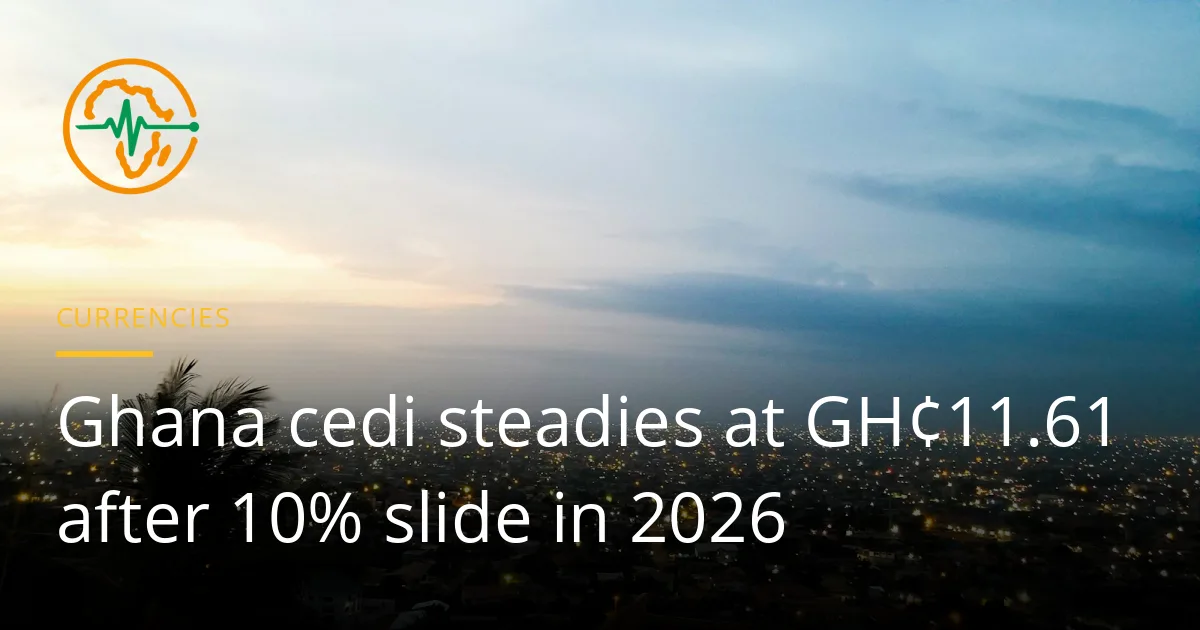
The Ghana cedi gained ground against the US dollar on Tuesday, closing at GH¢11.6116 on the Bank of Ghana's interbank selling rate, down from GH¢11.6708 a day earlier. That is a small move, but it comes after a year in which the currency has lost roughly a tenth of its dollar value and was named Africa's worst performer for the second quarter by the World Bank.
For importers, investors and anyone holding cedi savings, the question is whether this week's firmness is the start of a recovery or a pause before the usual year-end pressure. The data so far points to a currency that is being held steady by gold-backed dollar supply rather than by a change in underlying demand.
Where the Ghana cedi trades this week
According to Bank of Ghana figures reported by Pulse Ghana's Christopher Sededzi Kwame, the interbank rates at the close of business on Tuesday, 20 October, were:
- US dollar: GH¢11.6000 buying and GH¢11.6116 selling, both about 5.9 pesewas lower than Monday.
- British pound: GH¢15.5104 buying and GH¢15.5270 selling, slightly higher than Monday, so the cedi weakened a little against sterling.
- Euro: GH¢13.0252 buying and GH¢13.0370 selling, down from GH¢13.0638 and GH¢13.0756.
Retail rates are higher. Modern Ghana's Isaac Donkor Distinguished reported forex bureaus buying the dollar at GH¢11.95 and selling at GH¢12.25 on Wednesday. That puts the street selling rate about 5.5% above the official interbank selling rate, a gap that matters for small businesses and households who cannot access the interbank market.
How far the cedi has fallen in 2026
The interbank reference rate stood at GH¢10.45 per dollar on 31 December 2025, according to Bank of Ghana historical data cited by The Rio Times. At Tuesday's GH¢11.61, the cedi has lost about 10% of its dollar value since the start of the year.
The path has not been smooth:
- The Bank of Ghana's September 2026 Monetary Policy Report put interbank depreciation at 7.11% for January to August, as reported by GBC.
- The cedi hit its weakest level of the year so far, GH¢11.85, on 5 June, according to The Rio Times.
- It recovered to about GH¢11.25 in late August before weakening again to GH¢11.77 on 12 October, when The Rio Times calculated the year-to-date loss at 11.2%.
Since 12 October, the cedi has clawed back around 1.4%. That recovery is the context for this week's firmer quotes.
The 2026 decline follows a very different 2025. The Rio Times notes that the cedi rose about 41% last year, from GH¢14.70 at the end of 2024 to GH¢10.45. Part of this year's fall is a correction from that rally.
Why the World Bank ranked the cedi last in Q2
In its October 2026 Africa economic update, the World Bank found that the cedi lost nearly 10% against the dollar between March and June, the steepest fall among the African currencies it tracks, as reported by The Ghana Report. The loti, the Namibian dollar, the South African rand and the lilangeni followed, each down by more than 6%.
The bank linked the pressure to the Middle East conflict. Higher oil and energy prices raised import bills, increased demand for dollars and drained reserves, while geopolitical risk pushed capital away from frontier markets. In seven of the 22 countries it monitors outside the CFA franc zone, peak depreciation exceeded 5%. By the end of August, the pressure had eased, with only 10 currencies still weaker than their end-February levels.
Ghana is a net importer of refined fuel, so a higher oil price feeds straight into dollar demand. We covered how the same oil shock is splitting winners and losers across the continent in our analysis of Brent at $110 and which African economies gain or lose.
Gold sales are doing the heavy lifting
The main support for the cedi this month has come from gold. The Rio Times, citing Joy Business and Citi Newsroom, reported that the Ghana Gold Board (GoldBod) sold US$255 million to commercial banks in early October: US$125 million on 6 October and US$130 million on 8 October.
GoldBod plans to sell US$1 billion in October, with US$500 million going to the Bank of Ghana for reserves. Those sales put dollars directly into the banking system, which helps meet import demand without forcing the central bank to spend its own reserves.
Databank Research expects the cedi to trade between GH¢11.60 and GH¢12.10 in the near term, with GH¢12.00 as a likely cap. "Sustained appreciation will depend on whether spot inflows can soften seasonal import demand," the firm said.
The Christmas import season
That seasonal demand is the risk to watch. Importers usually stock up for the festive period from October onwards, and fuel bills remain high. If GoldBod's dollar supply slows, or oil prices climb again, the cedi could test the top of Databank's range before year-end.
Inflation and rates give the Bank of Ghana room
The good news for the cedi is that inflation remains low. Government Statistician Alhassan Iddrisu reported headline inflation of 5.2% in September, up from 5.0% in August. Food inflation rose to 4% from 3%, while non-food inflation eased to 6.2% from 6.8%, according to Nairametrics.
That is below the Bank of Ghana's medium-term target of 8% plus or minus 2%, which the central bank kept unchanged at its latest Monetary Policy Committee meeting, according to Joy Business. Nairametrics reported on 7 October that the policy rate stood at 14%, unchanged since March.
With real interest rates high, cedi assets still pay well in inflation-adjusted terms. That helps hold foreign and local savings in the currency, even as the exchange rate weakens.
What this means for businesses and investors
- Importers should budget around Databank's GH¢12.00 level for year-end payments and expect retail rates to stay above GH¢12.
- Exporters and gold-linked earners gain from each cedi of depreciation, but GoldBod's sales could cap further losses.
- Portfolio investors earn high real yields on cedi bills, but must weigh them against a currency that has lost about 10% this year.
For now, the Ghana cedi is holding inside a narrow band near GH¢11.60. Whether it stays there depends less on the Bank of Ghana and more on how many dollars GoldBod can put into the market before the Christmas import rush peaks.